


Alfin Febrian Basundoro is a junior lecturer in the Department of International Relations at Universitas Airlangga and Research Coordinator of the Centre for National Defense and Security Studies (CNDSS). The views expressed are the author’s own and do not represent SEA Daily or that of another organisation.
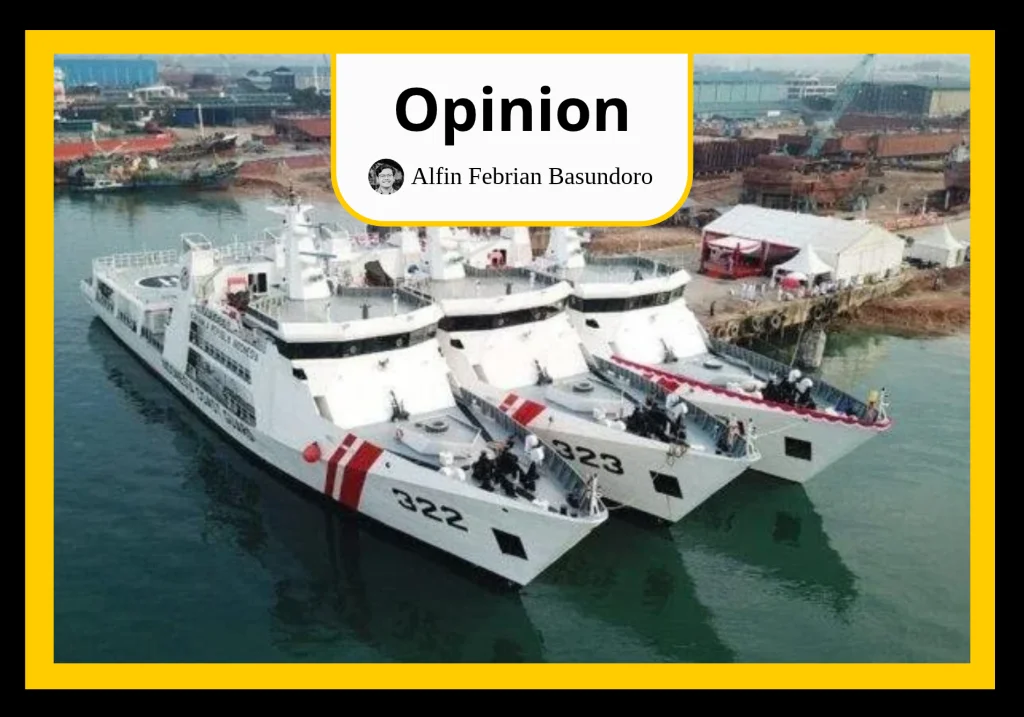
Japan-Indonesia defence cooperation has strengthened significantly over the past year. Numerous ministerial visits culminated in the signing of a defence cooperation agreement in Jakarta in May 2026. This further institutionalised exchanges between the two militaries and opened the door to equipment transfers, joint military exercises, and other joint activities. While much commentary has covered Indonesia’s plan to acquire Japan’s military equipment, including frigates and retired destroyers, a subtler Japanese plan to upgrade Indonesia’s port in outer islands may matter more.
In 2023, Japan agreed to help develop fishing ports in Natuna, Sabang, Biak and three other Indonesian outer islands. Recently, in mid-September 2026, Tokyo decided to prioritise upgrading Natuna fishing port into a dual-use port so the Indonesian Coast Guard’s patrol vessels can operate from it. The waters around the Natuna Islands form part of Indonesia’s exclusive economic zone (EEZ) and sit at the southern edge of China’s unilateral claim dubbed the ‘nine-dash line’—which Jakarta has never recognised.
The port upgrade may bolster Japan’s maritime interests in Southeast Asia and improve its reputation as a supportive regional partner. However, Indonesia also gains significantly, strengthening its maritime security and territorial integrity by enabling it to maintain a consistent presence in this vital maritime area.
Natuna As a Staging Base for Indonesia
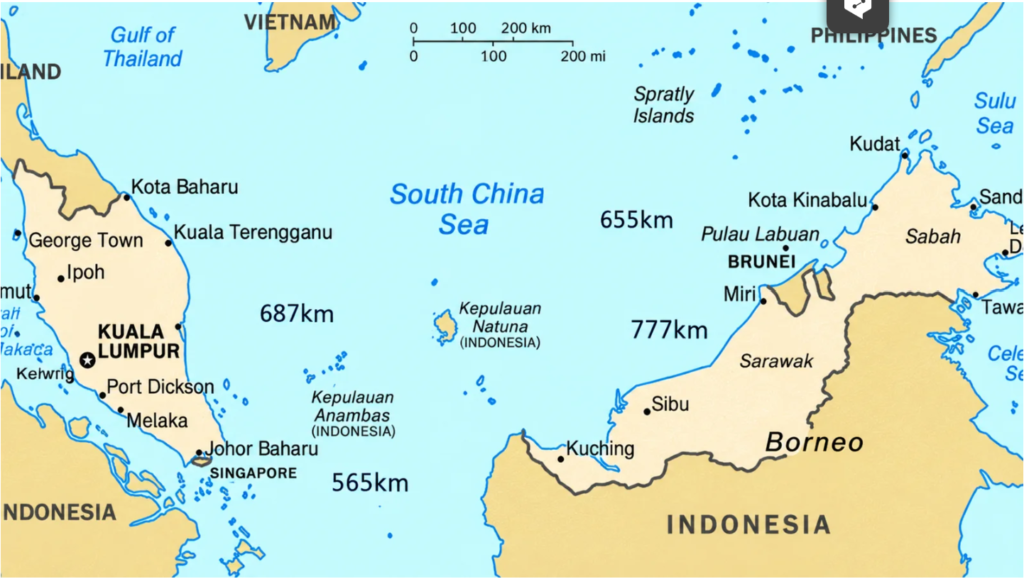
The position of Natuna Islands (written here as “Kepulauan Natuna”) within the South China Sea. (Indonesian Presidential Secretariat)
Arif Havas Oegroseno, Indonesia’s Vice Foreign Minister, recently asserted that a maritime nation’s optimal strategy is not to control the sea but to deny foreign adversaries access to it. This approach is often called an “anti-access/area denial” (A2/AD) strategy, in which smaller states use cost-effective yet capable naval assets—such as missile boats and fast-attack craft—to deter more formidable adversarial navies from encroaching on their territory. Indonesian defence policymakers have consistently espoused this strategy, citing its reduced reliance on larger, more expensive vessels. However, implementing a comprehensive A2/AD strategy requires sustained presence, which in turn drives the development of nearby ports to support naval operations.
China has demonstrated a notable proficiency in implementing A2/AD strategy in contested areas. In October 2024, one of its vessels shadowed a survey ship contracted by the state oil company Pertamina until Indonesian coast guard and navy ships arrived to escort it away. Such tactics—characterised by ongoing, deniable pressure that stops short of outright conflict—tend to favour the party that can sustain its presence longer. Indonesian vessels, often dispatched from distant naval bases in mainland Sumatra and even Java, frequently use a significant portion of their fuel and crew time merely on transit. Currently, Indonesia’s only naval base there, Lanal Ranai, remains a minor one. Establishing a network of dual-use ports on one of Indonesia’s outermost islands would strengthen Indonesia’s ability to stay on station in its own waters.
What Does Each Side Get?
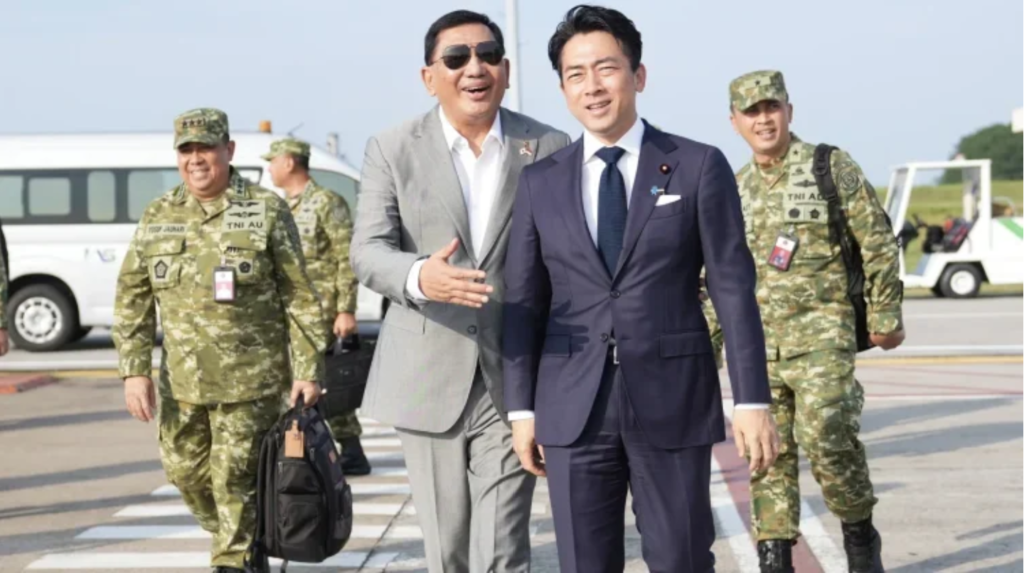
Japanese Defense Minister, Koizumi Shinjiro, visited Indonesia and met Indonesian Defense Minister, Sjafrie Sjamsoeddin in Bali in May 2026. (Indonesian Ministry of Defense)
Japan’s initiative to upgrade the fishing port represents a strategic manoeuvre. It not only demonstrates positive, institutionalised engagement with Indonesia but also effectively serves its maritime interests. Approximately 80% of Japan’s energy imports pass through the South China Sea. By helping Indonesia strengthen its naval presence in this critical region, Japan contributes to the stability and security of these essential maritime routes without direct naval deployment. This approach allows Tokyo to cultivate a positive image as a benevolent strategic partner in Southeast Asia while simultaneously minimising its direct military footprint in a region that resists foreign military presence.
Indonesia also ultimately benefits from the arrangement. While supporting Indonesia’s outer-island patrol, Japan gains no military base and no rights to station troops. The financial aspect further underscores this dynamic: Japan will likely fund the ports through regular loans rather than its military aid program. This decision aligns well with Indonesia’s foreign policy approach, characterised by a free and active stance—maximising benefits from each partner while avoiding reliance on explicit foreign military aid or military alliances.
A Template for Southeast Asia
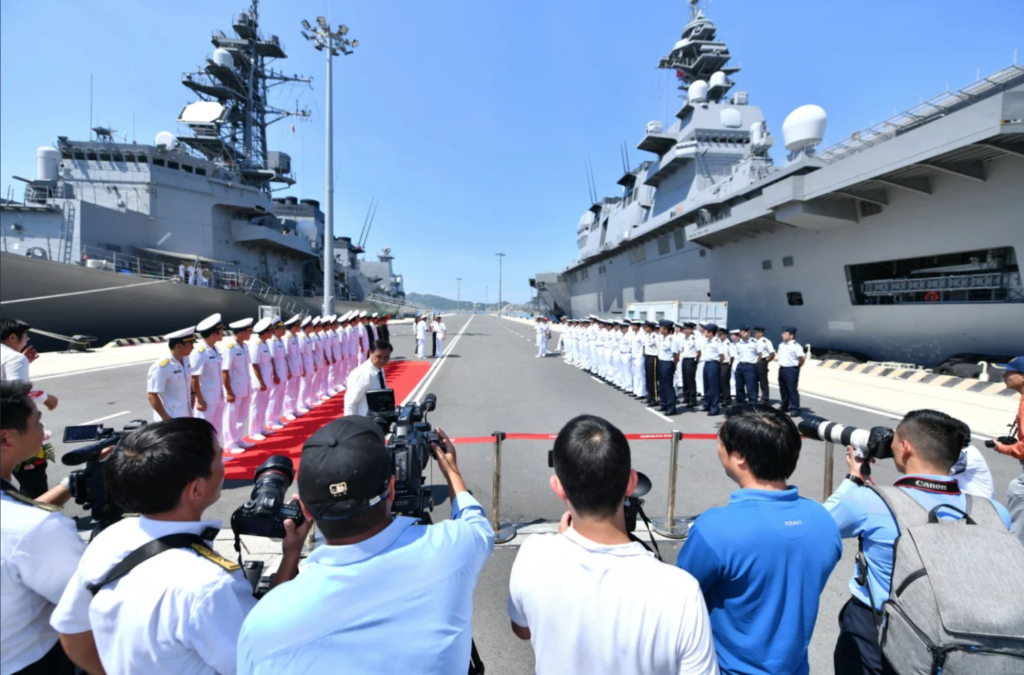
Japan Maritime Self-Defense Force’s first-of-class flattop JS Izumo visits Vietnam’s Cam Ranh port in June 2019. (Japan Maritime Self Defence Force)
Japan’s pledge to develop dual-use maritime infrastructure in Natuna is not the first instance in the region. Japan has spent two decades building maritime law-enforcement capacity through civilian channels, including transferring patrol vessels and constructing key facilities for agencies in Cambodia, Malaysia, the Philippines and Vietnam. In January 2026, Japan funded the construction of boathouses and slipways for the Philippine Navy, marking its first infrastructure project under the Official Security Assistance programme. Natuna extends the same shift from platforms to fixed facilities to the development assistance track.
For Southeast Asia, Japan’s approach offers external security assistance without requiring the hosting of foreign troops. Japan’s emphasis on law-enforcement—rather than military—assistance has enabled it to deliver capability without triggering fears of militarisation. Vessels provided by Japan are unarmed and training focuses on law enforcement rather than naval operations. In a region that resists foreign military bases and foreign military alliances, the dual-use format lowers the political cost of accepting help. This corresponds to Southeast Asian states’ relatively high trust in Japan—77.3% in the Philippines, 72% in Cambodia and 67.9% in Vietnam.
However, this also risks setting a precedent. If civilian ports are permitted to host patrol vessels, other states may use similar reasoning to justify their own port initiatives, making the distinction between development and military basing, which Southeast Asia has traditionally maintained, increasingly difficult to uphold.
What Can’t a Port Upgrade Fix?
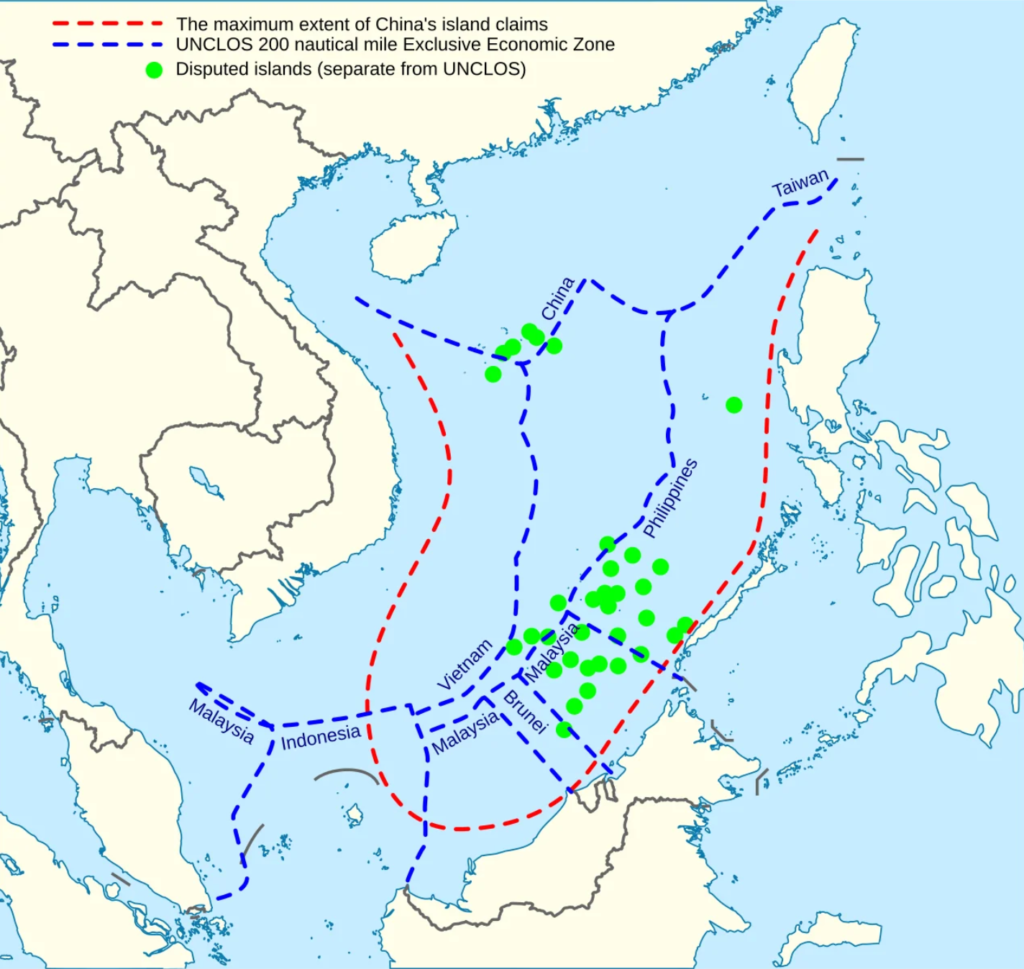
China’s maritime claim (red) and UNCLOS exclusive economic zones (blue) in the South China Sea. (Wikimedia/Gorak Tek-en)
While better ports will improve Indonesia’s presence in the outermost islands—and its deterrence effect against foreign adversaries—several cautions remain. First, the 2024 joint statement signed by Indonesian President Prabowo Subianto and Chinese President Xi Jinping has never been withdrawn, which will further legitimise China’s unilateral claim to part of Natuna waters and its ongoing naval deployment in the area. Also, Indonesia’s mixed signals to its strategic partners diminish the value partners place on their collaborations. This is evident in the fact that two weeks before the Indonesia-Japan defence ministerial meeting, an Indonesian frigate conducted a brief exercise with the Chinese navy east of Taiwan.
Both Japan and Indonesia benefit from the port upgrade. Japan will get credit for being a benevolent partner in Southeast Asia, while Indonesia gains enhanced maritime presence in its vital waters. Ships that can refuel and conduct repairs near the waters they monitor can maintain a consistent presence in the contested Natuna Sea. For Southeast Asia, this suggests external partners can contribute to maritime security without asking anyone to choose sides and instead support the region’s strategic autonomy. However, Jakarta must remain realistic about its limitations. Improved ports can extend the time vessels spend at sea, but they do not resolve the political challenges Indonesia faces regarding who contests its waters.
Artikel ini pernah diterbitkan di South East Asia Daily, tanggal 5 Oktober 2026
Sumber
Basundoro, Alfin, 2026. “What Does Indonesia Really Get from Japan’s Natuna Port Upgrade Plan?” [Online]. In https://sea-daily.com/what-does-indonesia-really-get-from-japans-natuna-port-upgrade-plan/ [accessed on 12 Oktober 2026]

